
Cycling
The name that makes France dream in cycling

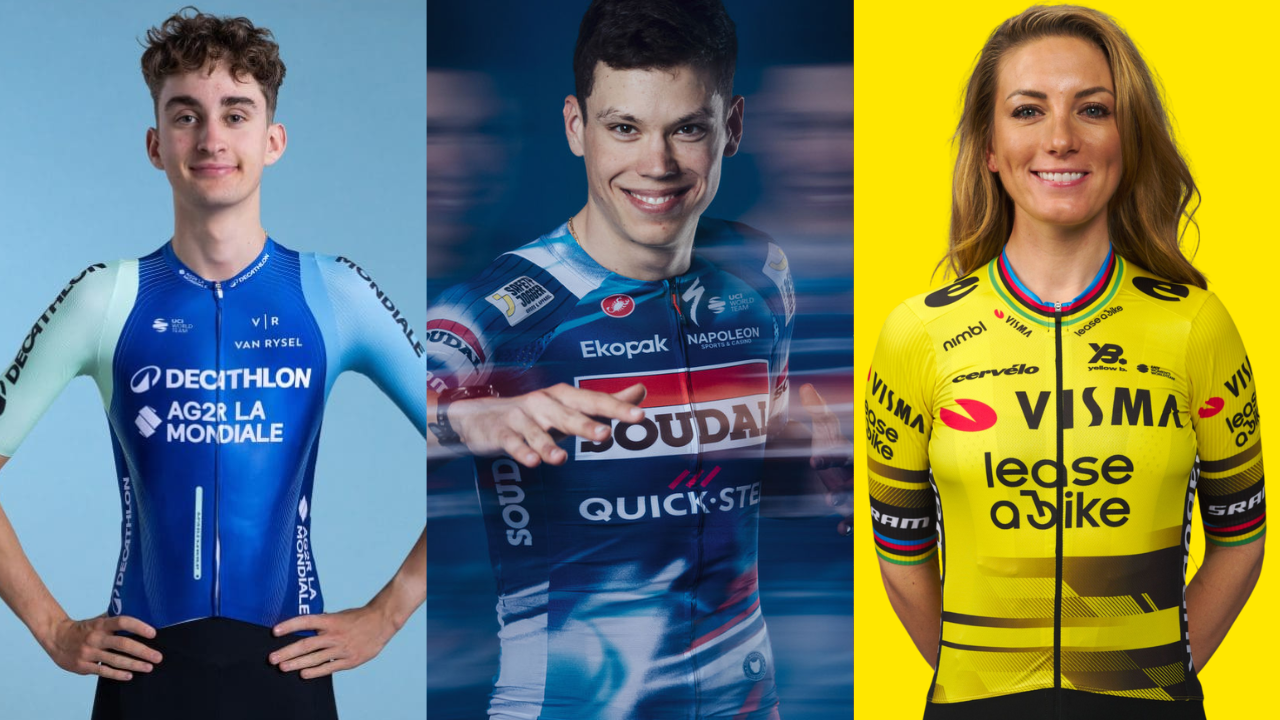
The name Paul in France was very popular between the end of the 19th century and the beginning of the 20th. Just think of the two famous artists Paul Gauguin and Paul Cézanne, and in cycling of Paul Masson, track gold medallist at the first modern Olympic Games in Athens in 1896. It ranked ninth among the most common names for those born in 1900, dropped to 43rd place mid-century, but climbed back to eighteenth in 2000. The feminine form was Paulette for most of the 20th century, then shifted to Pauline only towards the end of the century, when perhaps memories of the Bonaparte family had completely faded, eventually becoming the sixth most common name among newborn girls. In 1992, 5,810 girls named Pauline were born in France, while in 2004 and 2006, 3,479 and 3,576 newborns named Paul, respectively, saw the light of day.
(Source: Institut national de la statistique et des études économiques, INSEE)
No Paul, and no Pauline, had ever won 15 or more professional road cycling races before 2024.
Paul Magnier, in truth, was born in Laredo, a dry Texas border town near Mexico where his father was working as an engineer in 2004 (there, the name Paul was not even among the 100 most common that year). The family returned home after three years and Magnier developed athletically in mountain biking before moving to cyclocross and road racing. He was already racing at a semi-professional level at 18 with the British team Trinity, then joined WorldTour giant Soudal Quick-Step the following year.
Paul won in his professional debut with the new team at his very first race in Mallorca with a blistering sprint, then repeated the feat at the Tour of Oman and three times at the Tour of Britain, always in a sprint finish. In 2025 he collected an astonishing 19 victories, just one less than cycling’s reigning king Tadej Pogačar, with thirteen of them concentrated in only three stage races between September and October. Magnier is not a pure sprinter: he has strong positioning skills in bunch sprints but is also excellent on short climbs, and can handle cobblestones and gravel thanks to his “multidisciplinary” background.
In the future, he could win the green jersey at the Tour de France, a prize that has eluded the home nation since 1995 (Laurent Jalabert), and he could also take at least one of the three Monument Classics with lower elevation gain. For Milan–San Remo, the wait has only been since 2019 (Alaphilippe), but France has gone much longer without lifting their arms in the cobbled races: since ’97 in Roubaix with Guesdon and since ’92 in Flanders with Durand.
Always assuming Tadej and Mathieu allow it.
You can’t talk about multidisciplinarity in cycling without mentioning Pauline Ferrand-Prévot, born in 1992 in the north of the country and, at just 23, simultaneously holding the world titles in road racing, cyclocross and cross-country mountain biking. After a disappointing Olympics in Rio, Pauline seemed to shift her focus more to off-road, making only occasional appearances on asphalt and the cobblestones of the northern classics. But this “focus” paid off, bringing a World Cup and world and European titles in various MTB disciplines, culminating in the much-dreamed-of Olympic gold in cross-country at her home Games in 2024.
Retire? Absolutely not. The call of the road is too strong. Pauline wants to race Paris–Roubaix Femmes, a race that didn’t even exist when she first emerged, but seems made for her—and she inevitably dominates it, winning a road race ten years after her previous triumph. What else didn’t exist back then? The Tour de France Femmes organized by ASO. And why not dominate that too, dropping all the strongest riders on the legendary Col de la Madeleine and in Châtel?
Pauline is already a legend, but she seems far from done.
The youngest Paul is also the most talked-about. Paul Seixas was born 19 years ago in Lyon, though his surname has Portuguese origins, and he too practiced cyclocross as a child with very good results. Already as a junior, however, he was absorbed into the AG2R (now Decathlon) development system, and at not yet 18 he won Liège–Bastogne–Liège juniors and the junior world time trial championship, as well as the Giro della Lunigiana, known as the “Tour of the destined.” The French team promoted him directly to the professional ranks in 2025, giving him a high-level race calendar from the start. Paul could have won his first race in Lienz at the Tour of the Alps, but he let teammate Prodhomme take it because, in his words, “he deserved one joy after five years of sacrifices” (ironically, Prodhomme would go on to win five more races in 2025).
At the Critérium du Dauphiné he faced the very best and surprisingly held his own in the general classification, finishing eighth and becoming the youngest rider ever to make the top ten in a WorldTour race. The victory at the Tour de l’Avenir seemed almost inevitable and served as the precursor to a stellar end of season, being among the thirty exhausted riders who finished the elite Worlds in Kigali and among the three on the podium at the elite European Championships, alongside two riders named Tadej Pogačar and Remco Evenepoel. And again, among the eight who finished in Bergamo behind the two aforementioned giants, many minutes down but still with great satisfaction.
And so we return to talk of expectations and Bernard Hinault, of that French yellow jersey in Paris back in 1985 that seems ever more distant, and also of that snowy Liège in 1980.
Keep an eye on the INSEE website and on the prevalence of the names Paul and Pauline in the coming decade: a surge is expected.
Dai un’occhiata alle altre notizie uscite qui su Universo Sportivo e rimanete aggiornati sui social con Universo Calcistico.


Clamoroso: Ciccone verso un cambio squadra già a fine stagione. Dove andrà e il perché

Ganna risponde ad Evenepoel: “Se vuole ci sediamo al tavolo insieme e…”

Il preparatore di Wout Van Aert sulle sue chance al Mondiale: “Dobbiamo essere onesti: se Wout aspetta…”

Europei 2026: Pogacar in startlist? Il commento della UAE

Pingback: Il nome che fa sognare la Francia del ciclismo - Universo Sportivo